Finding an Australian's Second World War service record online
Almost all WWII service records in Australia have been digitized, and you can read them online for free. This guide explains where your grandfather's record is held and how to find it by name.
Where WW2 service records are held in Australia
The National Archives of Australia holds the service records for all three armed services. Its collection has over one million records of Australian men and women who served in the Second World War, in these groups:
- Army. Personnel dossiers for the Second Australian Imperial Force, and service records for the Citizen Military Forces.
- Royal Australian Navy. Service cards for officers, and service cards for petty officers and men.
- Royal Australian Air Force. Personnel files for officers, and files for non-commissioned officers and other ranks.
If your grandfather stayed in uniform after the war, the Department of Veterans' Affairs says his record may still be with the Department of Defence.
WW2 service records Australia online and free
As of June 30, 2024, the Archives had digitized around 1,058,000 WWII service records, and 99 percent of them can be viewed online. The Archives says the Army and Air Force files are free to view and download, and that all the Navy service cards are available to view online.
The remaining 1 percent are available on request, and that's free of charge too. If the record you want isn't online, use the general enquiry form linked on the Archives' page about digitizing Second World War service records.
The Archives also runs a separate copying service for other paper records in its catalog. You order those with the "request copy" button, and a fee applies.
What to gather and the World War Two nominal roll
A few details make the search easier. Collect what you can of these:
- His full name
- His service number
- His place of birth, or the place where he enlisted
- His date of birth
If you only have a name, the World War Two Nominal Roll can fill in the rest. It's an index run by the Department of Veterans' Affairs. It lists some one million people who served in Australia's defense forces and the Merchant Navy between September 3, 1939, and September 2, 1945.
Each entry is a snapshot taken from the service record. According to the Australian War Memorial, it gives the service number, the place and date of enlistment, the place and date of birth, the unit at discharge and the next of kin. You can search it by name, and there's a place search too.
Australians who served with other Commonwealth or Allied forces aren't on the roll, and the country they served with may hold their records. Our guides to British service records and Canadian service records cover two of those countries.
How to find WW2 enlistment records in RecordSearch
RecordSearch is the National Archives' collection database, and it's where the digitized records live. A surname and a service number are enough to start.
- Open RecordSearch.
- For a basic search, enter the person's surname and service number.
- You can also use the NameSearch tab to look for one person. For a sailor, choose "Navy personnel records" in the dropdown menu.
- Select "view digital copy" next to the record to read it on screen.
- To keep a copy, select the "Export PDF" icon in the digital copy window.
RecordSearch has a help tab, and the Archives' page on researching war service explains each step in more detail.
What a WWII service record contains
An Army record usually includes the attestation form, which is the enlistment paper. It sets out personal details such as his age and former occupation, and it names his next of kin.
The service and casualty form, known as Form B103, is usually there too. It gives details about his units and postings, along with any injuries and disciplinary charges. Some files also hold a discharge form that sums up his service.
Air Force files have a record of service form, which lists postings, training, promotions and next of kin. Navy records are double-sided cards that show details such as date and place of birth, home port, postings and awards.
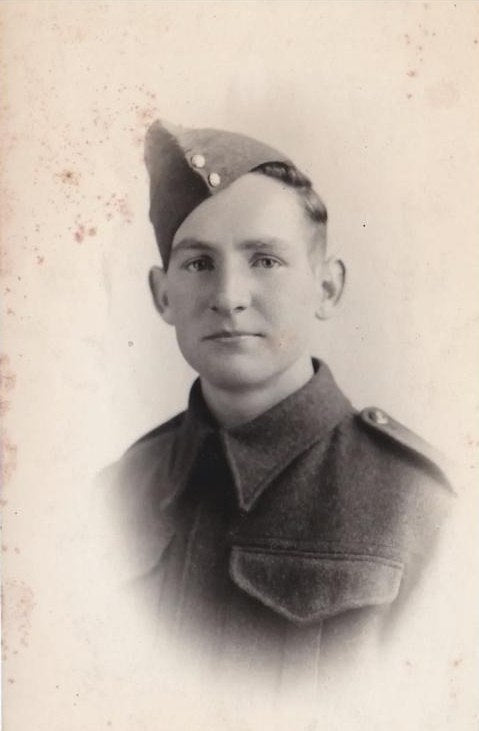
Around 40 percent of WWII Army and Air Force records also include an identity photograph of the person.
How to find out where your grandfather served in WW2
His service record names his units and the dates he was with them. The Archives explains that these records were kept to administer personnel, and that you may find the daily detail in other sources.
For the Army, the main one is the unit war diary. Commanding officers kept one to record daily activities and location, and the Australian War Memorial holds the Second World War unit war diaries. The diaries of headquarters and infantry units have been digitized, and others can be read in the Memorial's Research Centre.
If he died in the war, the Memorial's Roll of Honour records his unit and his date of death alongside his personal particulars. Some entries add the place of death and the cemetery or memorial.
Our guide to what your grandfather did in WWII lists more places to look.
Bringing his record and his letters together
A service record gives you his units and postings. The letters and photos your family kept tell you what those places were like for him.
We put the two together for families, and every line of the finished site says where it came from. If you'd like it done for you, see how a story site is made.